The Gesture of Becoming: On Hortensia Mi Kafchin and the quiet radicalism of transition
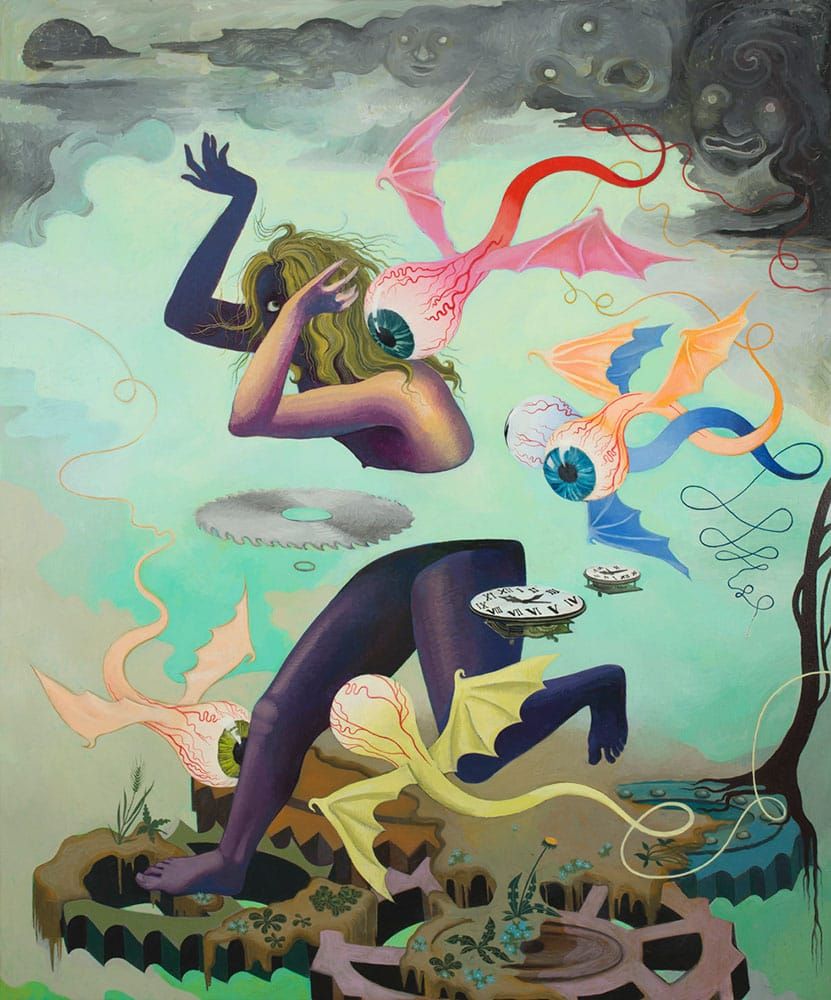
Born in Galați, Romania and now living and working in Berlin, Hortensia Mi Kafchin is a compelling thinker whose work translates contradictory thoughts into a multifaceted practice of recurring motifs and an obsession with catching things in transition.
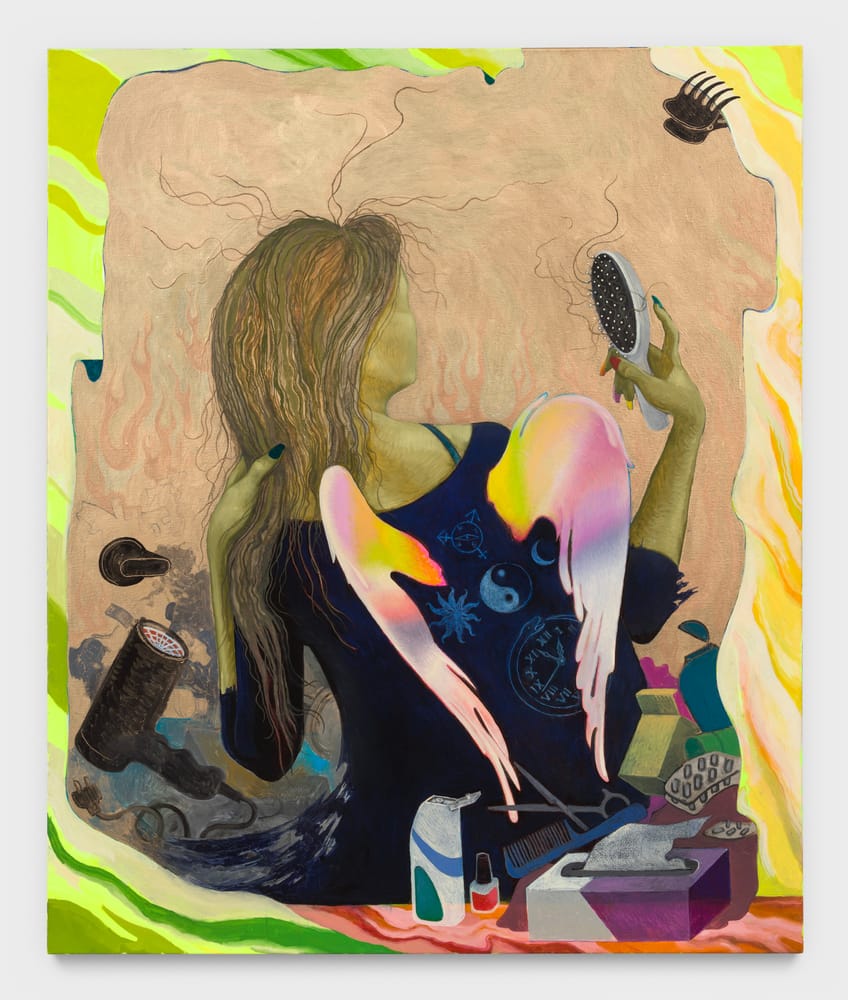
Bodies, images, belief systems. It feels native to an era where nothing stays in one register for long and mirrors how the world seems to absorb through overlapping screens, references and realities.
Seen through the prism of many personal transitions, she practices a surreal, narrative figuration where east becomes west, science becomes spirituality and man becomes woman.
Kafchin's transition was catalysed not by ideology but by a near-death health scare in 2015. She does not frame it as liberation or rupture, but as something quieter and more internal that sits at the centre of her work without causing compromise.
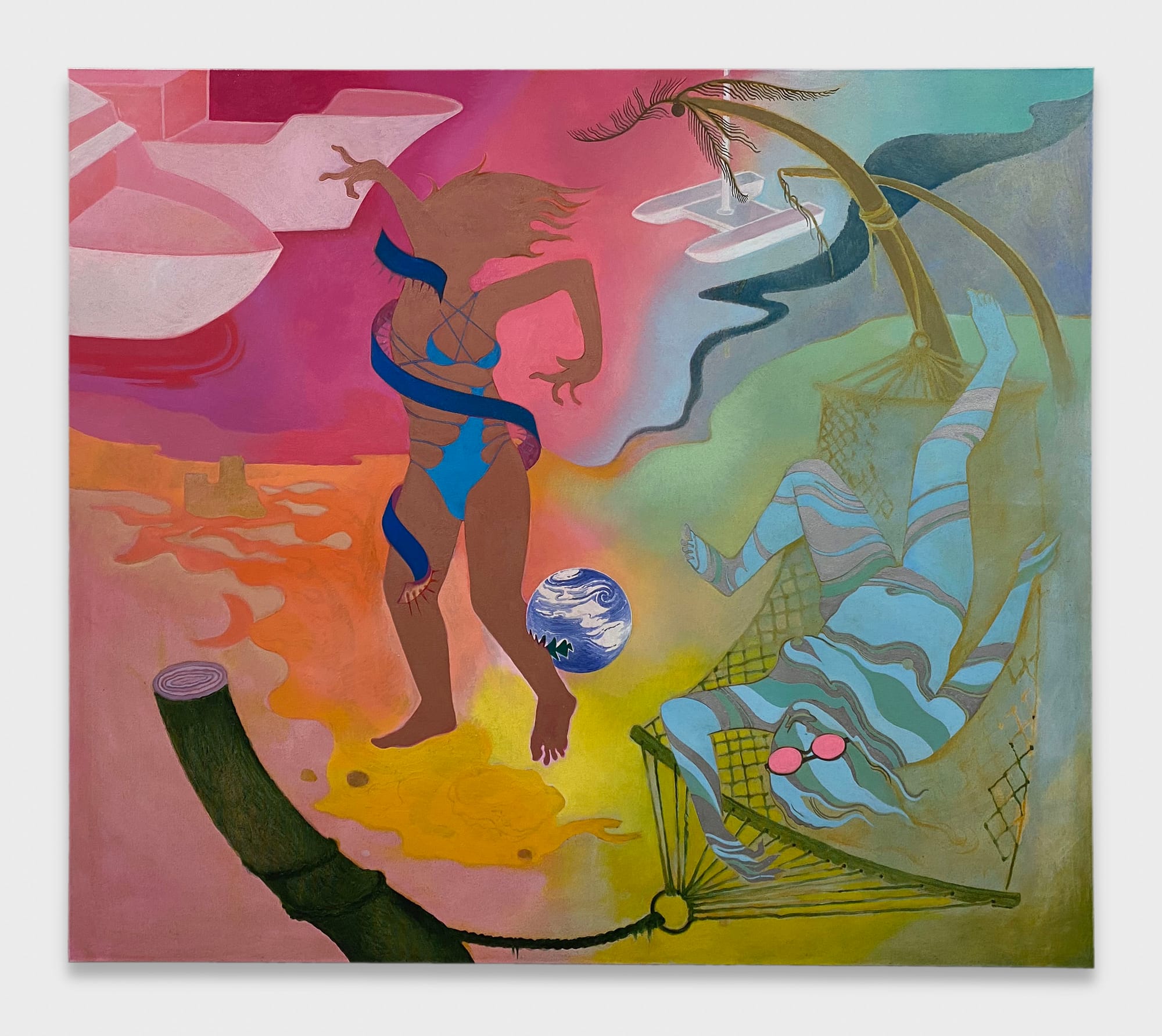
When asked whether she fights the guilt that comes with modifying what Orthodox religion might call God's design, she resists the language of struggle altogether:
"It's not even about fighting it, it's more about finding a good place in my mental space, and about organising my thoughts internally. In a strange way, to transition is almost like a gesture of humility."
What she means by humility is specific and what one may find surprising. Without testosterone, she reflects, one learns to care more, to stop minimising other people's realities and from there she moves, almost without blinking, into something theological.
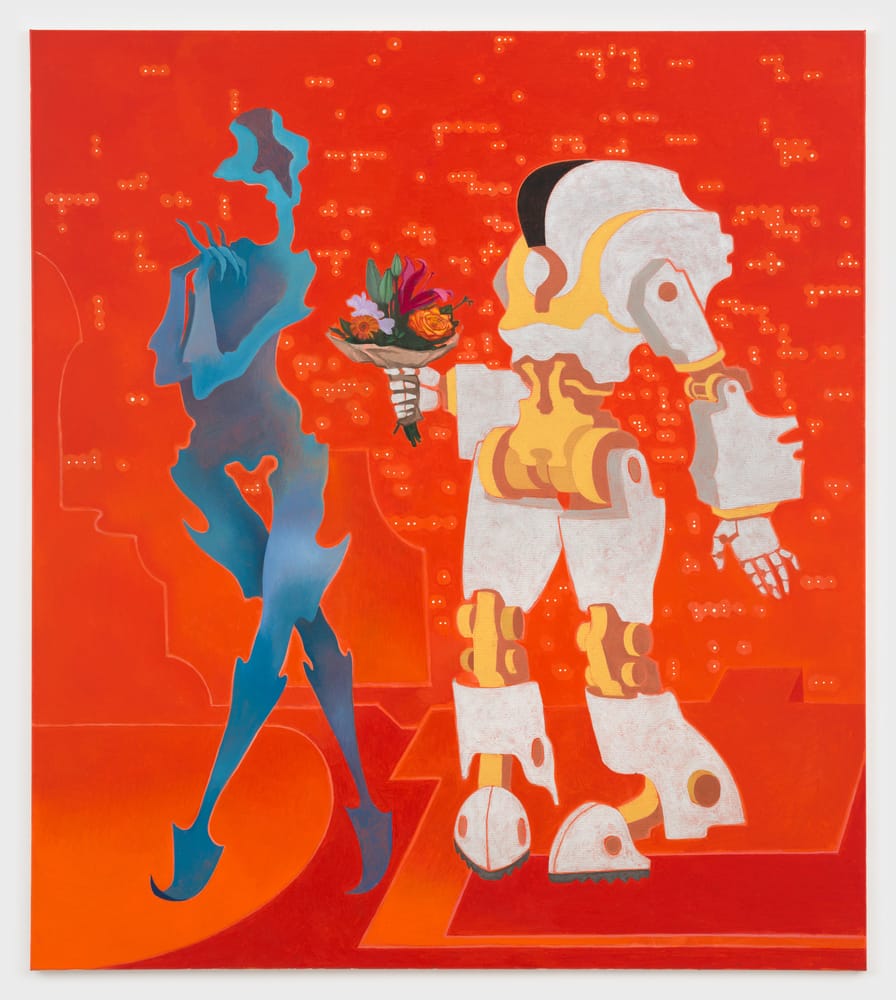
Women, she says, have always been closer to God. Biblically they are the pious ones, present at the temple, mourning at the crucifixion. "As a woman, you don't want to doubt everything anymore. You don't want to kill the Messiah, you want to receive him." Transition is not rejection of the self but an opening toward spiritual reception.
Since being taken on by New York's P·P·O·W Gallery in January 2024, in a co-representation arrangement alongside her long-standing Berlin gallery Galerie Judin, Kafchin's profile in the United States has grown considerably. The partnership was a natural fit: PPOW has built its programme around figuration and politically underrepresented voices, and Kafchin had already appeared in the gallery's group exhibition I'm Not Your Mother in 2022 before the formal relationship was announced. Two solo shows followed in succession, Years of Bad Hair in 2023 and Paintings Made for Aliens Above in autumn 2025.
Recent exhibitions include Cheerful Melancholia at Galerie Judin, Berlin (2024) and Through Different Eyes, currently on view at the Leslie-Lohman Museum in New York, a new installation in which a trio of eyes examines the experience of being surveilled as a trans woman and Romanian immigrant, moving from blood cells to code, cyborgs and planets.
The question Kafchin returns to remains: how do you build an honest self inside a world that resists one?
(Source: Nicodim Gallery, "Hortensia Mi Kafchin & Adriana Blidaru in Conversation," Living Content, August 27, 2019, nicodimgallery.com. P·P·O·W Gallery, "P·P·O·W to Represent Hortensia Mi Kafchin," January 24, 2024, ppowgallery.com. Hyperallergic, "Hortensia Mi Kafchin Refuses a Monolithic Trans Identity," December 2, 2025, hyperallergic.com. Leslie-Lohman Museum of Art, "Through Different Eyes," 2026, leslielohman.org)